
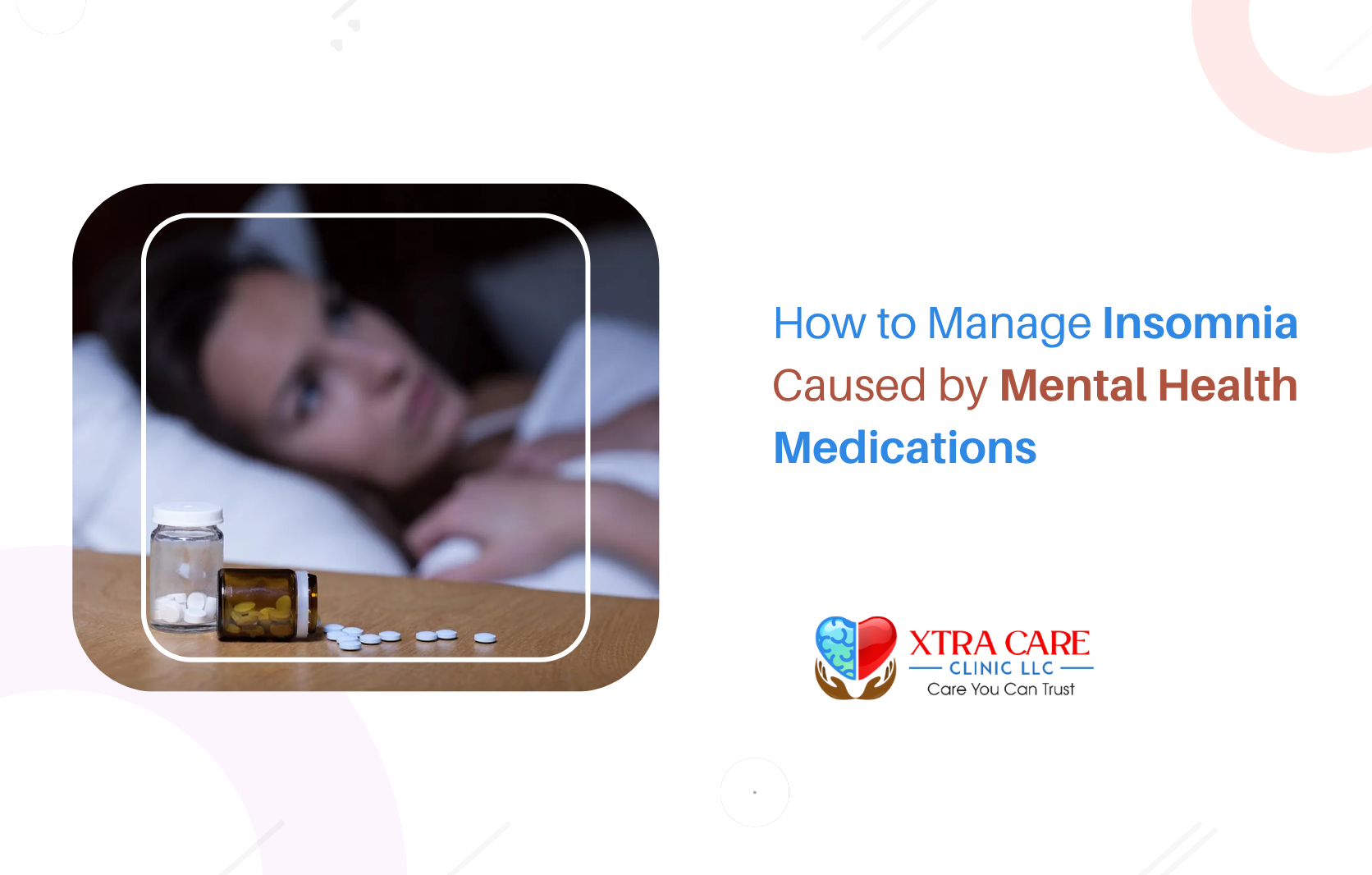
Many people start treatment for mental health problems like depression, anxiety, or ADHD, hoping to feel better, only to find themselves struggling with sleep issues or insomnia due to mental health medications.
If you find yourself tossing and turning at night following antidepressants, ADHD medication, or anxiety treatment, you’re not alone. Medications for psychiatric mental health conditions can cause insomnia as a side effect, which is quite common, and some measures can be taken to alleviate this effect.
At Xtra Care Clinic, we help patients with healthy sleep and effective mental health treatment. This guide will explain why medications for mental health come with insomnia, and how you can deal with it.
Can Mental Health Medications Cause Insomnia? (Quick Answer)
Yes. Sleep disturbances may happen while taking mental health medications because they impact chemicals in the brain, like serotonin, dopamine, and noradrenaline.
Because of these changes, it can lead to:
- Difficulty falling asleep
- Frequent nighttime awakenings
- Early morning waking
- Restless or poor-quality sleep
But the insomnia caused by medication is usually treatable, and it doesn’t indicate that you should not take the medication.
Why Mental Health Medications Affect Sleep
Mental health medications help to normalize the neurotransmitter chemicals in the brain at a particular moment. The same chemicals also play a role in controlling your sleep-wake cycle, which is why there may be sleep problems.
Not everyone experiences insomnia in the same way. Factors are:
- Type of medicine
- Dosage
- Timing of medication delivery
- Brain Chemistry of an Individual
- Stress and lifestyle factors
Medications Most Commonly Associated with Insomnia
1. Sleep Disorders and Antidepressants
Some antidepressant medications can increase alertness in a person or affect the REM (dream) cycle. Specifically:
2. ADHD and Insomnia Medications
Medications for ADHD (like stimulants) can disrupt sleep, especially if taken later in the day.
3. Mood Stabilizers and Antipsychotics
Some may cause:
- Restlessness
- Interrupted sleep
- Changes in sleep depth
4. Anti-Anxiety Medications
They can have varying impacts, some sedative and some still have an impact on normal sleeping patterns.
Symptoms of Medication-Induced Insomnia
If you experience the following, then you might have a sleep problem caused by medications:
- Difficulty getting to sleep or falling asleep in more than 30–60 minutes
- Awake several times at night
- Having trouble sleeping if awakened early and not going back to sleep
- Daytime fatigue or brain fog
- Irritability or problems with focus or attention
Tip: One of the key signs of a sleeping problem is that it develops after a new medication or adjustment has started.
How to Confirm If Your Medication Is Affecting Sleep
Using a simple sleep diary can be helpful in identifying sleep patterns.
Track:
- Sleep time and rising time
- Medication timing
- Caffeine intake
- Screen use before bed
- Night awakenings
- Energy levels the next day
This can assist your provider in changing your treatment appropriately.
How to Manage Insomnia Caused by Mental Health Medications
1. Talk to Your Prescriber (Most Important Step)
Never discontinue medication without a doctor’s advice. However, your provider is likely to:
- Adjust dosage
- Change medication timing (morning vs evening)
- Switch to an alternative medication
2. Optimize Medication Timing
Certain medications are more stimulating and are more effective in the morning. The right timing can make a world of difference in getting good restful sleep.
3. Improve Your Sleep Hygiene
Evidence-based practices for sleep are:
- To create a regular sleep and wake schedule
- No screens for 1 hour before sleep
- Don’t drink caffeine after lunch
- A cool, darkened sleeping area
- Bed for sleeping only
- Soothing nighttime routine
4. Techniques to Relax and Sleep Better
- Breathing technique (4-7-8)
- Progressive muscle relaxation
- Meditation or mindfulness advice
Useful for calming an overactive nervous system.
5. Lifestyle Changes That Support Sleep
- Morning sunlight exposure
- Engaging in regular physical activity (except late at night)
- Balanced meals
- Stress management techniques
- Reduced evening stimulation
When to Seek Professional Help
Contact a health care professional if:
- Insomnia over a period longer than 2–3 weeks
- Sleep changes affect work or daily life
- Mood symptoms worsen
- Emotional overload
- You feel drained emotionally in your situation
The disruption of a sleep cycle can be avoided if intervention is offered early.
How Xtra Care Clinic Helps with Medication-Related Insomnia
Xtra Care Clinic Dallas specializes in helping patients with both mental disorders and the sleep side effects of their medicines.
Our services include:
- Psychiatric medication management
- Treatment for ADHD and depression
- Care for anxiety and mood disorders
- CBT for sleep, anxiety support
- Personalized treatment adjustments
- Telemedicine and in-person visits
Dr. Evelyne Imah is a dual-boarded Psychiatric Mental Health Nurse Practitioner and provides caring, evidence-based care individualized to the patient.
Common Myths About Medication and Sleep
Myth 1: Medication can’t be continued if it disturbs sleep.
Reality: Many sleep concerns can be solved by adjustment of both timing and/or dosage.
Myth 2: Only ADHD medications are responsible for insomnia
Reality: Antidepressants and mood medications can also affect sleep.
Myth 3: Sleep problems mean the medication is wrong for you
Reality: Side effects can become better as they are “adjusted” and “monitored.”
Conclusion
Medication-induced insomnia often occurs and can be addressed. Medications for mental health issues can interfere with sleep. Still, it’s not usually a matter of stopping the meds, but making the medication work for you, making your lifestyle changes, and seeking assistance.
With the right approach, you can achieve both:
- Better mental health
- Better sleep
For those who find themselves unable to sleep after beginning psychiatric medication treatment, Xtra Care Clinic in Dallas can assist you in getting the correct balance of treatment and sleep.
Make an appointment to see us today, face-to-face or via telemedicine.
FAQs
Can antidepressants cause insomnia?
Yes, some antidepressants have effects on sleep, particularly SSRIs and SNRIs.
Do sleep problems from medication go away?
Yes, in most cases, particularly after changes in dose and timing.
How do you sleep better on ADHD meds?
Take medications early in the day, no caffeine, and regular sleep schedules.
Should I stop my medication if I can’t sleep?
No. Always ask your provider if you want to change anything.
No comment